Redefining the problem
Sometimes the smartest move is answering a different question than the one asked.
Solve the problem you were handed, only faster or cheaper.
Solve a better problem than the one you were handed.
Sutherland's signature example (Eurostar spending six billion pounds to shave under an hour off the Paris journey, when a fraction of that on wifi or even free champagne would have delivered more perceived value) recurs across dozens of talks as a template for a broader habit of mind: substitute the assumed problem ("reduce travel time") for a better, often far cheaper one ("improve the experience of the journey").
He applies the same move elsewhere: arguing the real problem with an airport wheelchair policy isn't mobility but the missing middle option between "disabled" and "walk," that a taxi wait is really about how the wait feels rather than how long it is, and that a good office is designed as "half library, half pub" rather than pure open plan efficiency. The unifying claim is that whoever gets to define the problem usually predetermines the solution, and most organisations hand that framing job to whichever department happens to be measuring something adjacent.
This is far easier to spot in hindsight than to apply in advance. For every reframe that would have worked, there are surely reframes that would have missed the actual, pressing problem entirely, and Sutherland's examples are almost all success stories, not attempts that failed.
296 verified insights in this theme
296 verified insights in this theme
Concluding argument connecting public transport funding to lower UK road-death rates via self-selection of drivers.
Arguing that Britain's bureaucratic dysfunction stems from institutions protecting themselves with process rather than being intrinsically useless or ill-intentioned.
Rory on why the most significant innovation comes from posing a different question rather than improving an existing paradigm.

Rory continuing directly from rs-3182 (Steve Jobs / orthogonal question) after a brief backchannel from the other speaker — same speaker, no substantive turn from anyone else in between.
Rory's metaphor for companies overreaching into an entirely new business instead of partnering around their actual innovation.

Opening his Wiki Man column of advice for new Labour leader Andy Burnham.
Arguing Uber won on the psychology of waiting, not on the ride itself.
On Uber's real innovation: reducing the psychological pain of not knowing when a cab will arrive, not shortening the actual journey time.
On electric-vehicle range anxiety, arguing the industry is solving the wrong half of the problem by spending billions on battery range instead of on reducing the anxiety itself.
On the legitimacy of solving a different, better question than the one originally posed.
Rory tells the story of Steve Jobs' return to Apple in 1997, recounted to guest Faris Aranki as an example of ruthless focus achieved through elimination rather than addition.
Rory continues the Steve Jobs anecdote, noting that Jobs' focus came from explicitly naming what Apple would abandon rather than merely what it would prioritize.
Rory recounts a conversation with musician Rick Rubin about how the ultra-wealthy inherit conventional status symbols rather than choosing genuinely oblique ones.
Summarizing legal scholar Joseph Fishkin's argument that uniform, like-for-like comparison criteria create an artificial bottleneck.
On identifying a market niche (queuing at airports/stations) where a full-customization coffee chain is the wrong answer.
On how a niche product (fast, no-choice coffee) found an unplanned second market in the conference industry.
On the advertising industry's need to pretend it follows a linear process when the real work is genuinely iterative and unpredictable.
Rory extends a famous economists' analogy about factory electrification to argue that organizations take decades to redesign work around new technology, in conversation with Josh Hart and Elfried Samba.
Rory gives his recurring example of innovation solving an emotional problem (anxiety) rather than the obvious functional one, as an illustration of what most innovation actually targets.
Rory contrasts Apple's emotionally-oriented question with the functional obsessions of the rest of Silicon Valley, continuing his point about what actually drives successful innovation.
Rory illustrates the idea that valuable creative output is often produced speculatively rather than commissioned, as part of his speculation that AI could flip advertising's commission model.
Rory argues that fields like email and calendaring have stagnated for decades because engineers find them boring, despite consumers spending hours a day on them.
Contrasting economists' explanations (e.g. for Uber's success) with his own view that success usually comes from solving a psychological barrier.

Describing the psychological insight behind the iMac, which market research would never have produced.
Describing the reframe behind the American Express campaign: rational appeals weren't the obstacle to applications.
The insight behind the American Express Gold Card campaign: the real obstacle was fear of rejection, not desire.
On how the American Express reframe (fear of rejection vs. desire for the card) shows the value of asking a different question.
Rory recounting the Obvious Adams book's example of diagnosing a failing shop.

Rory on the Taco Bell London door-placement failure and post-hoc explanations.
Introducing an underexplored idea in loyalty design: gifting benefits to others.

Coining a term for loyalty benefits that let members bestow rewards on others.
Rory proposing a radical idea to close the episode: a government points system.
Elaborating his proposed government loyalty-currency idea (the 'zog').
Concluding the government loyalty-currency thought experiment.
Rory summing up his closing 'zog' government-currency idea.
Opening framing of the keynote's central argument.

Contrasting incremental marketing gains with rare, game-changing breakthroughs.
Reframing electric-vehicle range anxiety as a psychological rather than purely engineering problem.
On why redefining a business problem can be a legitimate way to solve it.
On siloed, department-level cost-cutting incentives undermining overall business value.

On why performance measurement should sit at team rather than individual level.
Rory arguing for the value of mathematics education beyond computation.
Rory on how mathematicians approach problem-solving through reframing rather than raw computation.
Rory summarizing why he values mathematics education.
Rory's argument against the value of high-speed rail once connectivity lets travel time be used productively.
Rory's conclusion from the Frank Lloyd Wright / Falling Water anecdote about reframing problems.
Rory on what actually distinguishes successful entrepreneurs.
Rory's Uber example recast as an instance of redefining the problem.
Rory generalizing his redefining-the-problem thesis to disruptive businesses broadly.
Illustrating quantification bias with his signature train example.
Introducing his signature idea of redefining the question, prompted by Srdjan calling him 'the guy that changes the question.'
Continuing on redefining the question in real-world problem-solving.
Drawing a parallel between mathematical reframing and real-world problem redefinition.
The boiling-water physics riddle illustrating how adding an unstated parameter unlocks a supposedly unsolvable problem.
Introducing the story of the Canadian businessman ('Monk') and Porto Montenegro.
Reframing the discussion of media and content-length trends using a distinction a futurologist once gave him.

On how businesses' preference for defensible reasoning over good outcomes constrains decision-making.
Continuing the argument that safe bets and wild-card bets are both necessary in recruitment.
Discussing Joseph Fishkin's book Bottlenecks and the hidden cost of 'equality of opportunity' in recruitment.
Paraphrasing Joseph Fishkin's argument from Bottlenecks about narrow competitive criteria.
Describing what Fishkin calls 'polarity of opportunity' as the alternative to equality of opportunity.
Explaining the "doorman fallacy" - how a job's single visible function hides its actual bundled value.
On why a marketer's presence guards against purely engineering-led decisions.
Closing tip on how marketers should present their value.
Cold open framing the episode's core business-strategy thesis.

On Steve Jobs' insight about Apple.
Contrasting school exam norms with real-world problem solving.
Continuing the school-exam contrast.
On why unsolved problems are usually badly framed.
The HS2/Disney thought experiment.
Continuing the HS2/Disney thought experiment.
On bureaucrats objecting to reframed questions.
On why bureaucrats dislike better questions.
On making a train station distinctive rather than merely functional.
On the Dallas-Fort Worth Airport Texan food outlets example.
On the IBM AS400 advertising story.
On the car salesman's reframed question, prioritizing repeat business over the immediate sale.
Commenting on the car salesman's long-term-relationship framing.
Discussing electric-vehicle range anxiety and reframing the problem from increasing range to reducing anxiety, citing Brian Eno's 'axis theory.'
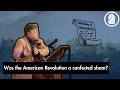
Using the iMac as an example of innovation coming from a new axis of attention (aesthetics) rather than functionality.
Contrasting Uber's focus on the psychological experience of waiting with competitors' focus on cost and speed.
Recounting how James Watt and Boulton, faced with mine owners uninterested in engineering specs, reframed the steam engine's value.
Introducing his concept for how consultants narrow a job description to justify automating it, using a hotel doorman as the example.
Explaining why market research misses opportunities like hotel-room monitors: unmet needs are unsaid because they're unfelt until offered.
Continuing on AI and imagination, arguing that asking good questions becomes the scarce skill once answers are automated.
The episode's central distinction: marketing as a narrow department (Capital M) versus psychology applied to any problem (small m).
Closing argument that institutions over-optimize for measurable efficiency at the expense of undiscovered opportunity.
Discussing the Ian Dale/Tunbridge Wells anecdote about admitting fault creatively.

Reframing the debate over London's 20mph speed limits.

Proposing mini roundabouts to replace traffic lights alongside 20mph limits.
Rory's proposal that gives the episode its title.
Describing Roger Martin's proposed lifetime tax-free allowance for young earners.
Introducing the 'Dorman fallacy' story about a hotel doorman being replaced by an automated door.

On airports serving two very different traveler psychologies at once.
On the call center as a unique source of insight into problems customers can't solve elsewhere.
House-buying advice: avoid optimizing for what everyone wants; instead find a flaw others dislike that you don't mind.
Core alchemy-style advice: never define an objective for humans without factoring in psychology, since psychological fixes can be cheaper than technological ones.
Introducing the 'Dorman fallacy' by name.
Full statement of the Dorman fallacy: consultants quantify only the doorman's stated function, missing the value he actually creates.
Rory on the proximate vs. ultimate objective distinction, citing John Kay's book Obliquity.