Alchemy
Some things work brilliantly despite defying any logical explanation, and that's fine.
If you can't explain why something works, it probably doesn't.
Some things work brilliantly and defy explanation entirely. That's not a flaw to fix, it's a result to use.
This theme carries the thesis of Sutherland's book of the same name: that psychology, unlike physics or economics, permits genuine magic: solutions that work without a defensible causal story, and that shouldn't be discarded just because they can't be explained. His central example is the placebo effect, which he argues is one of the most powerful tools in medicine and yet one that most scientists spend their careers trying to strip out rather than deliberately use; a pet rock, similarly, takes something with zero intrinsic value and successfully attaches real emotional value to it.
He extends the physics/psychology split into his most repeated aphorism: in psychology, unlike in physics, "the opposite of a good idea might be another good idea." He argues that businesses which stumbled on a psychological insight rarely set out looking for one; the trade off simply dissolved once someone stopped assuming it was fixed.
'Alchemy' is also history's name for things that looked like they worked but didn't. The whole category risks becoming an unfalsifiable label for 'I can't explain why this succeeded, so I'll call it magic' rather than a genuine account of a hidden mechanism.
81 verified insights in this theme
81 verified insights in this theme
Following the penicillin and Viagra discovery stories, on creativity as an unasked-for answer rather than a planned solution.
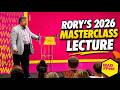
On the 'bottomless brunch' as a reframe of what is, functionally, breakfast for alcoholics — an example of a solution nobody explicitly briefed for.
On why business decisions get dressed up in rational-looking process rather than admitted as subjective or intuitive.
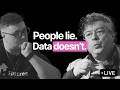
On serendipity as the real engine of both scientific and creative discovery.
Closing thought of the talk, on the danger of over-optimizing away all randomness from a business.
Rory on Red Bull and miso soup as examples that defy rational analysis.
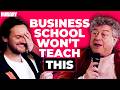
Rory's example of farmers markets defying economic logic.
Rory explaining why farmers markets succeed despite economic irrationality.
On companies cutting celebration/training budgets first, discussing Roger Martin and critical non-essentials.
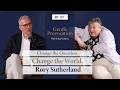
Using the monarchy as an example of a 'critical non-essential' with hidden strategic value.
Critiquing the cultural bias toward pure efficiency, following the monarchy/Chesterton's fence discussion.
Describing the rarity and value of non-logical psychological insights, just before the closing lines.
Framing Adam Smith's opposition to mercantilism as an early insight that value can be created rather than merely redistributed.
Using his 'dishwasher Darwinism' analogy to justify trying unconventional approaches to intractable problems.
Explaining the thesis of his book Alchemy via the 20mph/roundabout example.
Coining a term for problems that survive because they resist logical/economic solutions.
Explaining the 'dishwasher Darwinism' analogy.
On why remaining hard problems resist rational/economic solutions.
Core alchemy-style advice: never define an objective for humans without factoring in psychology, since psychological fixes can be cheaper than technological ones.
On the nature of good non-rational business ideas.
Concluding the trade-off reframing discussion with the concept of mental catalysts.
Concluding the hotel room-naming example as a case of pure psychological value creation (a co-panelist then replies 'we're not').
Rory contrasts the rigidity of physical/economic laws with the malleability of psychological ones.

Rory generalizes from the Dyson/Disney examples about the role of psychological insight in business success.
On resisting either/or thinking when solving business problems.

Rory contrasting fixed laws of economics/physics with mutable laws of psychology.
On AO's branded teddy-bear-for-kids delivery gesture.
Introducing the principle (credited to Einstein and Niels Bohr) before applying it to retail strategy.

Introducing his core thesis on why economic/physics models exclude 'magic' solutions.
Explaining why a physics/economics mindset forecloses on 'magical' non-trade-off solutions.
Citing economist Nicholas Gruen's critique of economics' trade-off framing.
Core alchemy thesis on psychological value versus technological value.
Explaining the motivation for writing the book Alchemy.
Concluding the point on psychological/magical solutions existing despite corporate skepticism.
Summarizing the Huel/Grenade bar contrast in strategy (health vs. taste positioning).
Introducing his closing argument about irrationality as a driver of business success, using Dyson as the central case.
Setting up why conventional market research would have rejected Dyson's 700-pound vacuum cleaner before it succeeded.
Explaining why conventional, 'sensible' products struggle to differentiate compared to seemingly irrational ones.
Explaining why counterintuitive discoveries are hard for competitors to copy even once revealed.
Opening framing of the talk on placebos and behaviour change.
Arguing against dismissing the placebo effect just because it's not mechanistically understood.
Recounting his grandfather's admission about the pre-antibiotic role of a GP.
Setting up the closing argument for psychology's unique capacity to create 'magic' value.
Contrasting economics' 'no free lunch' with psychology's capacity for value creation via story.
Criticizing the industry's attempt to reduce advertising to a narrow, measurable science.
Continuing his opening argument about advertising being misclassified as a hard science.
Using a nature metaphor to argue that advertising and marketing investment is a legitimate form of value creation.
Criticizing the attempt to model advertising as a Newtonian science that denies the possibility of value creation from framing alone.
Citing classic ad lines as examples of reframing weaknesses into strengths.
Making his closing argument that marketing is not decoration on top of value but constitutive of value itself.
Contrasting the economic assumption of conservation of value with the psychological reality that meaning can create value from nothing.

Arguing that reframing consumption around meaning rather than material quantity could make environmentalism more appealing.
Arguing against finance-driven views that treat marketing as a cost rather than a source of value.
Contrasting the zero-sum assumptions of economics with the value-creating potential of psychology.
Explaining why genuinely novel solutions face a natural aversion in business and policymaking.
Explaining why large, established companies tend to lose the capacity for the 'magic' that built them.
Drawing the parallel between medicine's placebo effect and marketing's psychological solutions being dismissed as cheating.
Introducing the Greeks' use of entasis — curving structures to correct for the distortions of human vision.
On why the Parthenon's floor and columns are deliberately non-rectilinear.
Continuing the case for non-obvious, illogical-seeming ideas.
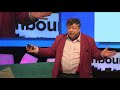
Contrasting scientific logic, where a claim's opposite is false, with marketing, where both extremes can work.
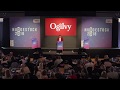
Explaining why he went into advertising
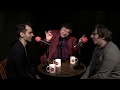
Transitioning into the Red Bull example
Introducing the Red Bull example
Concluding the constitutional monarchy example
Previewing his next book's thesis
Explaining why Red Bull's small can and bad taste helped, not hurt, its success against Coca-Cola.
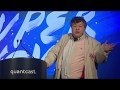
Using capsaicin's effect on perception as a natural example of a purely psychological 'innovation.'
Stating the general recipe for a '10x innovation' after the chili and vaping examples.
Concluding the wagamama 'authentic Japanese noodle bar' story about managing diners' expectations.
On the stigma against psychological (versus engineering) solutions, illustrated by the placebo effect and rail travel.
On the bias against psychological solutions like the placebo effect.
Describing Nicholas Humphrey's 'central governor' theory of pain and resource allocation.
On experimental evidence for the 'central governor' theory of immune resource allocation.
Personal anecdote reinforcing the placebo-effect argument.
Closing statement of the talk.
Opening his argument that advertising's creation of meaning can be part of the solution to overconsumption, not just its cause.
Defending the pet rock, often cited as a marketing excess, as an example of creating value without consuming scarce resources.
Drawing the conclusion from the pet rock example about intangible value substituting for material consumption.
Concluding the engineering-bias section before turning to positive examples.
Building the case for placebos as an underrated, low-cost way of creating real psychological value.